
🌍 The Unified Voice of Over 300 Million Indigenous Peoples Worldwide
The United Ancient Indigenous Enlightened Nations – General Assembly (UAN-GA) bridges ancient wisdom and modern governance to foster a harmonious, sovereign, and sustainable global Indigenous community. Established in 2003 under the Charter of the United Ancient Indigenous Enlightened Nations.
Comprised of 160+ Member and Observer Indigenous Nations, serving as the chief deliberative, policymaking, and representative organ of the UAN.
Key Focus Areas
- Indigenous rights and sovereignty
- Traditional ecological knowledge
- Cultural preservation and heritage
- Sustainable development practices
- Peaceful consensus building
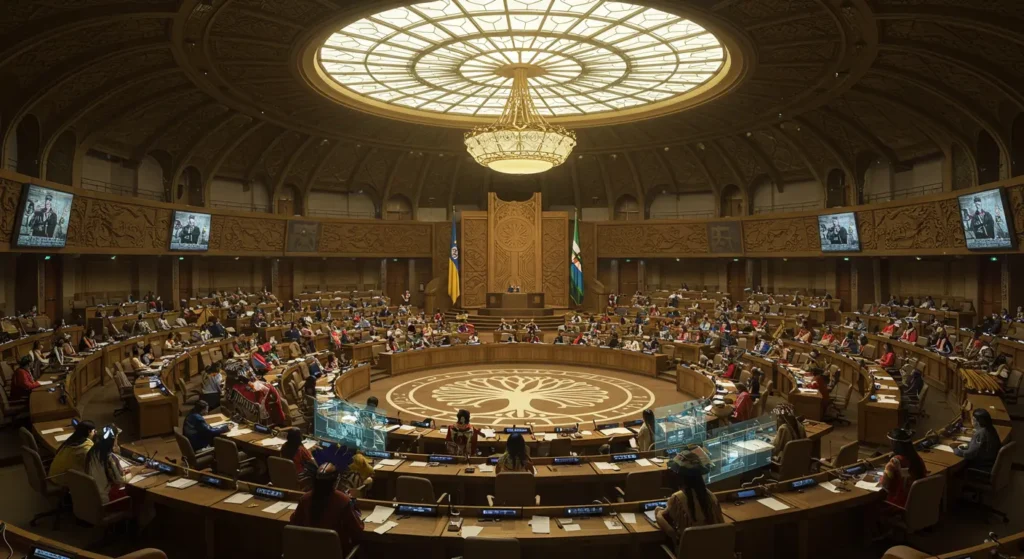
Functions and Powers of the General Assembly
The Assembly operates through traditional Indigenous governance principles while engaging with modern international frameworks.
- Decisions on important questions—such as those on peace and security, admission of new member nations, and budgetary matters—require a two-thirds majority
- Decisions on other questions are passed by simple majority
- Emphasizes consensus-building circles over formal voting
- The Assembly adopts its own rules of procedure and elects a Chief Speaker and 21 Elder Advisors for each session
Core Functions and Powers
Legislative & Advisory Role
Makes recommendations on international Indigenous issues and acts across all governance pillars: political, economic, humanitarian, social, cultural, and spiritual.
Powers Under the Charter Include:
- Approving UAN budget and financial assessments
- Electing members to the Elder Council and other organs
- Recommending the appointment of the Secretary-General
- Recommending principles for peace, security, and cultural protection
- Discussing and advising on any matters within the Charter
Indigenous Forum
Engages over 300 million Indigenous peoples from 5,000+ communities globally, promoting sustainable development rooted in traditional ecological knowledge.
Assembly Activities:
- Annual UAN Summit with ceremonial and council sessions
- Year-round traditional governance meetings
- Initiating studies to promote political cooperation
- Development and codification of Indigenous international law
- Realization of Indigenous rights and fundamental freedoms
Decision-Making Process & Structure
Voting Structure
Each of the 160+ Indigenous Nations has one vote. The Assembly emphasizes consensus-building circles over formal voting, following traditional Indigenous governance practices.
Voting Requirements:
- Two-thirds majority required for major decisions
- Simple majority for other questions
- Consensus-building preferred approach
- Cultural protocols integrated into decision-making
Credentials & Protocols
The Credentials Committee is appointed each session to verify credentials and cultural protocol compliance of Indigenous representatives.
Official Protocols:
- Blends international diplomacy with traditional Indigenous governance
- Ensures cultural authenticity and dignity
- Emphasizes sovereignty and ancestral knowledge
- Indigenous Delegates Handbook issued annually
Main Councils of the General Assembly
The Assembly’s six councils each handle agenda items aligned with their specialized areas:
Council for Indigenous Trade & Economic Cooperation
Council for Indigenous Trade & Economic Cooperation
Council for Indigenous Trade & Economic Cooperation
Council for Indigenous Trade & Economic Cooperation
Council for Indigenous Trade & Economic Cooperation
Council for Indigenous Trade & Economic Cooperation
Some critical issues, such as land rights and cultural sovereignty, are handled directly in the plenary sessions.
Regional Structure & Subsidiary Organs
Regional Circles
Used for elections and consultation, with the Chief Speaker rotating among these circles based on traditional protocols:
Subsidiary Organs
The Assembly may establish subsidiary organs as deemed necessary:
- Elder Councils
- Cultural Preservation Commissions
- Traditional Governance Committees
- Spiritual and Healing Circles
- Working Groups for Specific Issues
Special Sessions:
Emergency sessions may be convened for urgent Indigenous rights issues, cultural crises, or environmental threats.